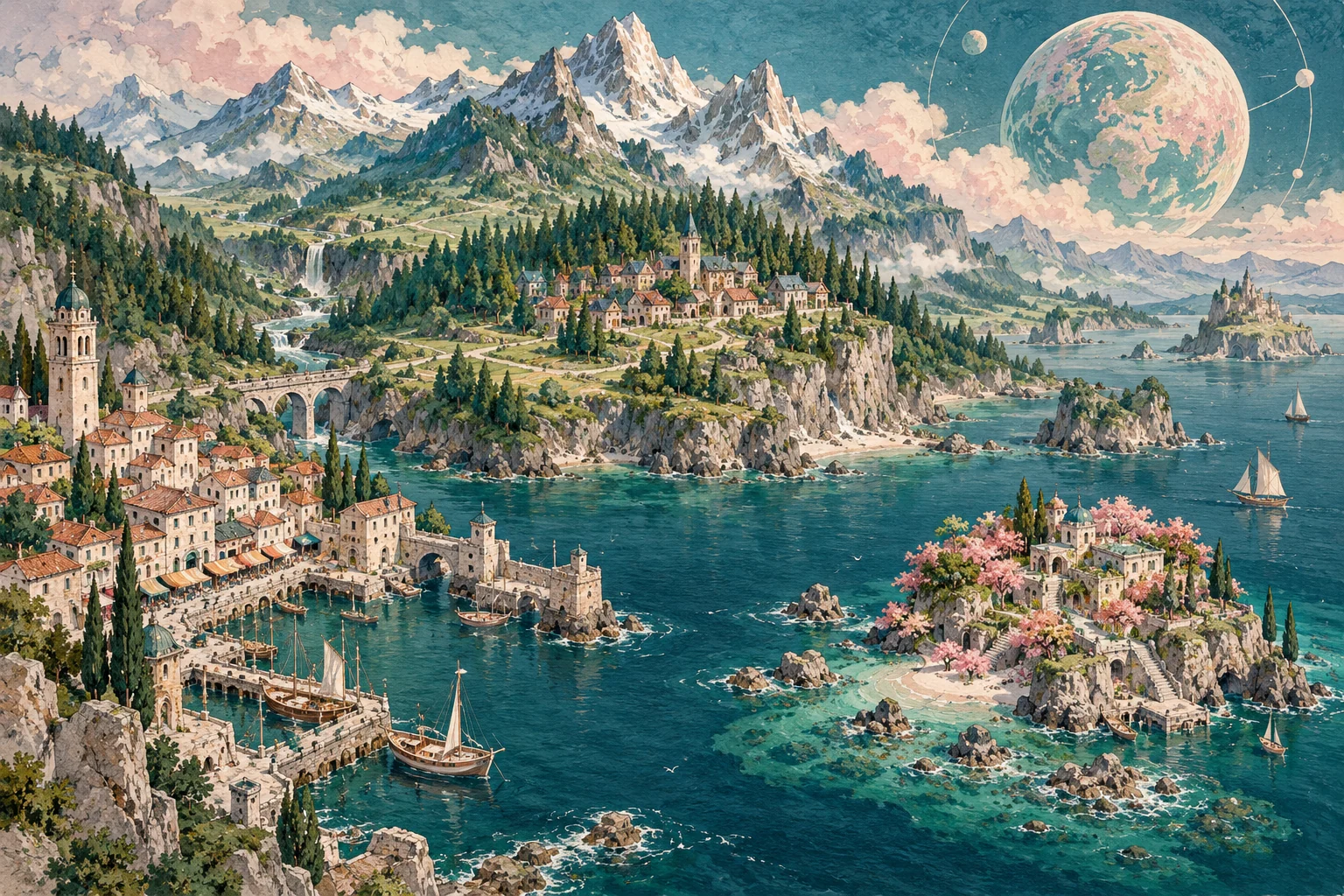
Connect a fictional nation to its people
A country’s formal name may describe its government while its everyday name preserves an older landscape or community. Start with the relationship between territory and people instead of adding a grand suffix.
Compare the name with neighboring regions and decide what a resident is called. A useful fictional nation should support ordinary dialogue as well as a map legend.
What to look for
- Distinguish the state from its capital.
- Try a resident’s adjective or demonym.
- Give political names a plausible history.
Check resemblance to existing countries and avoid borrowing a real people’s identity as shorthand.
A useful starting brief
A fictional country known for gardens and invention
The generator currently uses curated names and rule-based combinations. Your brief helps select themes; it is not processed by a language model. Use these ideas as a starting point and check real-world usage separately.
Three directions to explore
Alder Union
A political identity with a natural anchor.
Valemere
A compact landscape-led fictional name.
The Coastward Republic
A state whose direction shapes its identity.
Illustrative editorial examples, not verified available names. Associations describe a creative direction, not an established etymology.
A question worth asking
How can I make a fictional country feel distinct from a kingdom?+
A country is a broader geographic and political idea; a kingdom names one form of government. Decide whether the state’s identity depends on a dynasty, shared institutions, or several regions before choosing a formal title.