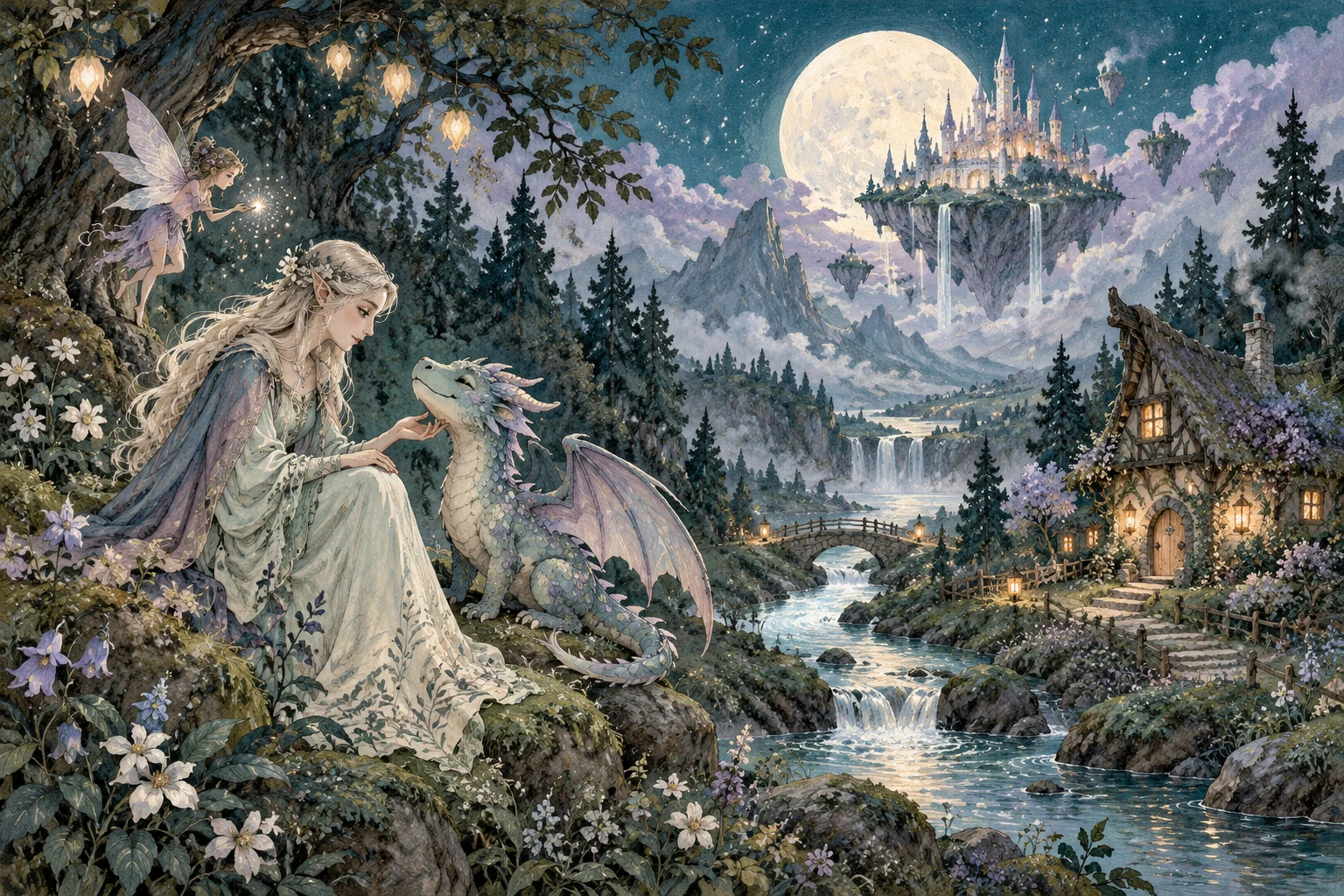
Build a place name with a shared history
A kingdom’s name usually belongs to more than a ruler. Think about the landscape, a founding event, a shared symbol, or the story its people tell about themselves. These details offer stronger material than grandeur alone.
Write the name on an imagined map and use it in a traveler’s sentence. A formal full name and a shorter everyday name can show different social contexts.
What to look for
- Choose one geographical or historical anchor.
- Compare the capital’s name with the kingdom’s name.
- Keep the spoken form comfortable in repeated dialogue.
Avoid borrowing an existing country’s history and presenting it as invented background without thought.
A useful starting brief
A floating kingdom built above a sea of clouds
The generator currently uses curated names and rule-based combinations. Your brief helps select themes; it is not processed by a language model. Use these ideas as a starting point and check real-world usage separately.
Three directions to explore
Cloudrest
A realm imagined above ordinary ground.
Aster Crown
A shared symbol turned into a formal name.
The Willow Marches
A border landscape with a lived-in feeling.
Illustrative editorial examples, not verified available names. Associations describe a creative direction, not an established etymology.
A question worth asking
Should the kingdom and its people share a name?+
They can share a root, but the forms need not be identical. Decide how a traveler describes the place and how a resident introduces themselves, then keep the relationship consistent.